Wet-Curtain Pre-Cooling
Evaporative cooling pads lower inlet air temperature toward wet-bulb conditions, improving coil performance during peak summer ambient.
Evaporative pre-cooling
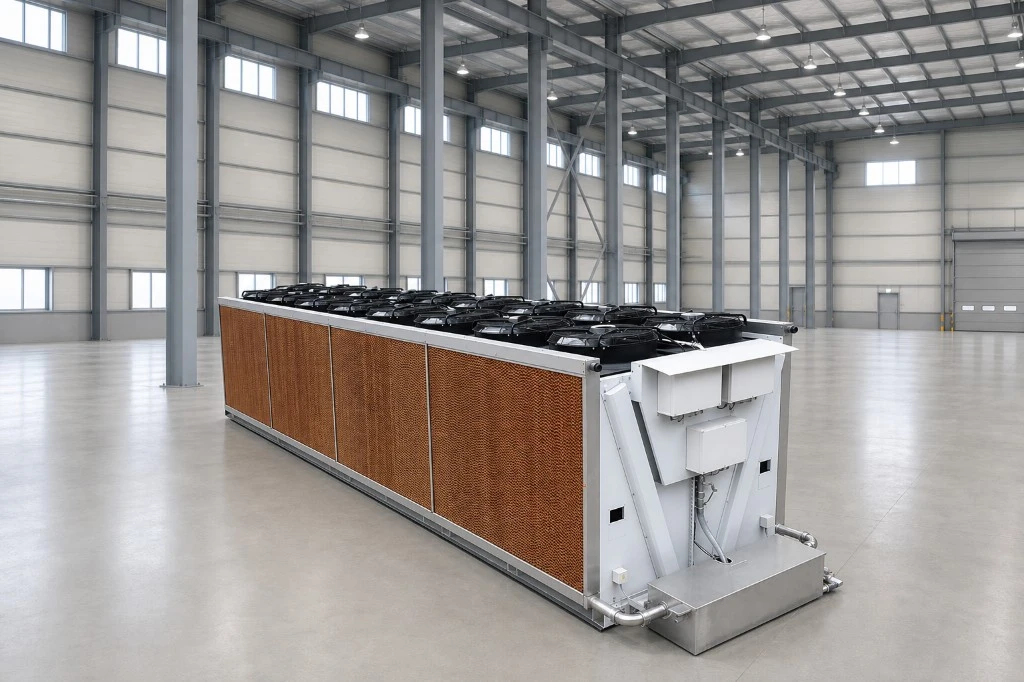
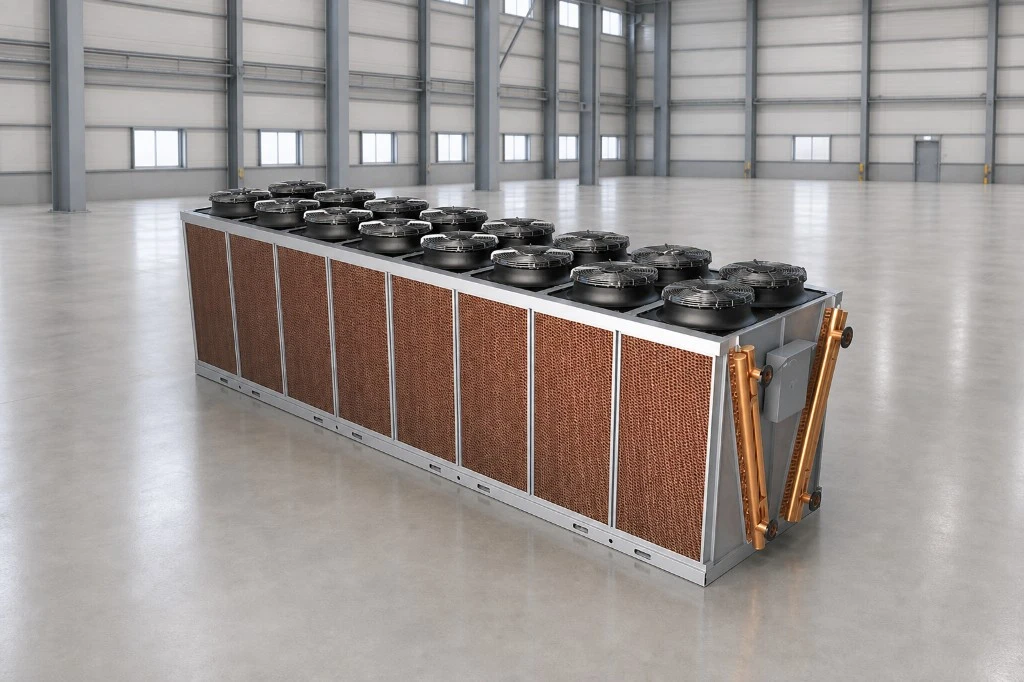
Integrated wet-curtain pads pre-cool inlet air before it reaches the dry coil, extending usable heat rejection when ambient dry-bulb temperatures are high.
Product advantages
Adiabatic pre-cooling lowers the air temperature entering the coil during peak conditions while allowing dry operation when the ambient permits.
Evaporative cooling pads lower inlet air temperature toward wet-bulb conditions, improving coil performance during peak summer ambient.
Helps maintain required heat rejection when dry-bulb temperatures would otherwise limit a standard dry cooler duty point.
Supports selective pad activation so the system can run dry when conditions allow and switch to adiabatic mode when needed.
Pre-assembled pad frames, water distribution, coil headers, and fan wiring reduce field installation and commissioning work.
Production gallery
Typical applications
Peak-condition support where high dry-bulb temperatures limit dry-only performance.
Heat rejection for facility and liquid-cooling loops with summer pre-cooling support.
Stable closed-loop fluid cooling across wider seasonal ambient conditions.
Projects that prefer dry operation with selective water use during peak duty.
Selection information
Adiabatic selection requires both thermal and water-management information. The final system is reviewed against local operating conditions.
Explore the range